
Dwelling Design · Wenatchee, WA
Furnishing and Styling for Pacific Northwest Homes
Furniture planning, trade sourcing, receiving and a single install day, so your rooms arrive as a whole rather than one delivery at a time.
The layer most homes never get
Construction ends long before a home is finished
A contractor hands over a set of keys, not a home. The floors are sealed, the cabinet doors close quietly, the lighting is trimmed out, and the rooms echo. What is missing is not decoration. It is the sofa that suits the depth of the room, the rug wide enough to hold the seating together, the lamp that puts light exactly where you read at night.
Furnishing and styling here covers three things: planning, purchasing and install. Planning means drawn floor plans at scale with real dimensions on every piece. Purchasing means we open the trade accounts, place the orders, read the acknowledgements and chase the delays. Install means a scheduled day when the truck arrives and the house is put together from the beds to the bookshelves.
Some households hire us for this alone, after a builder finishes or after years in a place that never quite came together. Others reach the end of a remodel with us and simply keep going into the furniture. Either way, the work of an interior designer in Wenatchee does not stop at the finish schedule. It stops when the rooms are genuinely usable.
Who this is for
The households this service suits
Most people who come to us for furnishing and styling arrive in one of these five situations.
- You are moving into a new build. The square footage is larger than your last home and almost nothing you own fits it. A sectional that filled the old living room now looks stranded, and a table for six sits in a dining room built for ten.
- You have bought one room at a time for years. Each purchase made sense on its own. Together they argue: four wood tones, three rug pile heights, and a coffee table nobody can reach from where they are actually sitting.
- You have children, dogs, or both. You want performance textiles, cleanable surfaces and a rug that survives muddy paws in March, without the house looking like every choice was made out of fear.
- You host more than you planned to. Family comes for a week at a time and the seating count never quite works. Furniture planning solves that on paper, before a single order is placed.
- You have run out of time. You are working, running a household, and the prospect of comparing sofa specifications for a month is not appealing. You want good decisions made for you and delivered on a date.
One plan instead of ten decisions
Why a whole-house plan beats buying a room at a time
Buying piecemeal feels like the responsible choice. The living room this year, the bedrooms next year, the dining table whenever it seems reasonable. The trouble is that every purchase is made against a different memory of the house. Scale drifts, wood tones drift, and the pieces never speak to one another because they were never in the same room, or the same conversation, at the moment they were chosen.
A whole-house plan reverses that order. Every room is drawn at once, so the runner in the entry knows about the rug in the great room and the finish on the dining chairs answers the stools already installed at the island. It also protects the money. We can see where the budget should concentrate and where something modest will do, rather than overspending on whichever room happens to be next in line.
- Scale is settled on paper. Sofa depth, rug size, walkway clearance and table height are drawn to the real dimensions of the room before an order goes in, so nothing arrives too big for the place it was bought for.
- One budget, allocated once. Money goes where it earns its keep, into an anchor sofa and beds you sleep well in, and stays modest on the pieces carrying no real weight.
- Materials answer each other. Wood tones, metal finishes and textiles are chosen as one set, which is close to impossible when the purchases are a year apart.
- Lead times overlap instead of stacking. Ordering in one window means the slow upholstery and the quick lamps land within weeks of each other rather than seasons apart.
- The house gets one disruption. Instead of a delivery every few weeks for two years, there is a single install day, and then you are living in it.
Sourcing, ordering, install
Why a sofa takes months, and what happens in the meantime
Most upholstery is built after you order it. The frame is cut, the foam is wrapped, and your fabric is cut and sewn for your piece alone. None of it starts until the order and the deposit clear. Three to four months is ordinary for custom upholstery, longer if the fabric itself is on backorder. Knowing that at the start is the difference between a calm schedule and a scramble.
We buy through trade accounts, which means we are the ones reading the acknowledgement, catching a wrong fabric code before it ships and following up when a date quietly slips. Freight is routed to a receiving warehouse rather than your driveway. Every carton is opened and inspected there, so a scuffed leg or an incorrect finish is found and replaced while the rest of the order keeps arriving.
Then there is one install day. The crew brings everything at once. We place the furniture, hang the art, set the lamps, dress the beds, lay the rugs, style the surfaces, and take the packaging away with us. You come home to rooms that work, not to a hallway of cardboard and a hex key. That single day is the entire reason for the receiving and inspection that came before it.
How it runs
From a measured plan to the day the truck arrives
Four stages, each one finished before the next begins, so nothing is ever ordered on a guess.
Measure and plan
We measure every room, then draw plans to scale: seating counts, walkway clearances, rug sizes, sightlines from the doorway, and where a lamp will need power.
Select and present
You see the whole scheme in one sitting, with fabrics you can handle and dimensions you can picture, so approvals happen as a set rather than piece by piece.
Order and track
Trade orders are placed, acknowledgements are checked line by line against the plan, and a live schedule tracks what has shipped, landed or slipped.
Receive and install
Everything is received, inspected and held, then delivered and installed on one scheduled day and styled down to the last shelf before we leave.
The last layer
Styling is where a room stops looking brand new
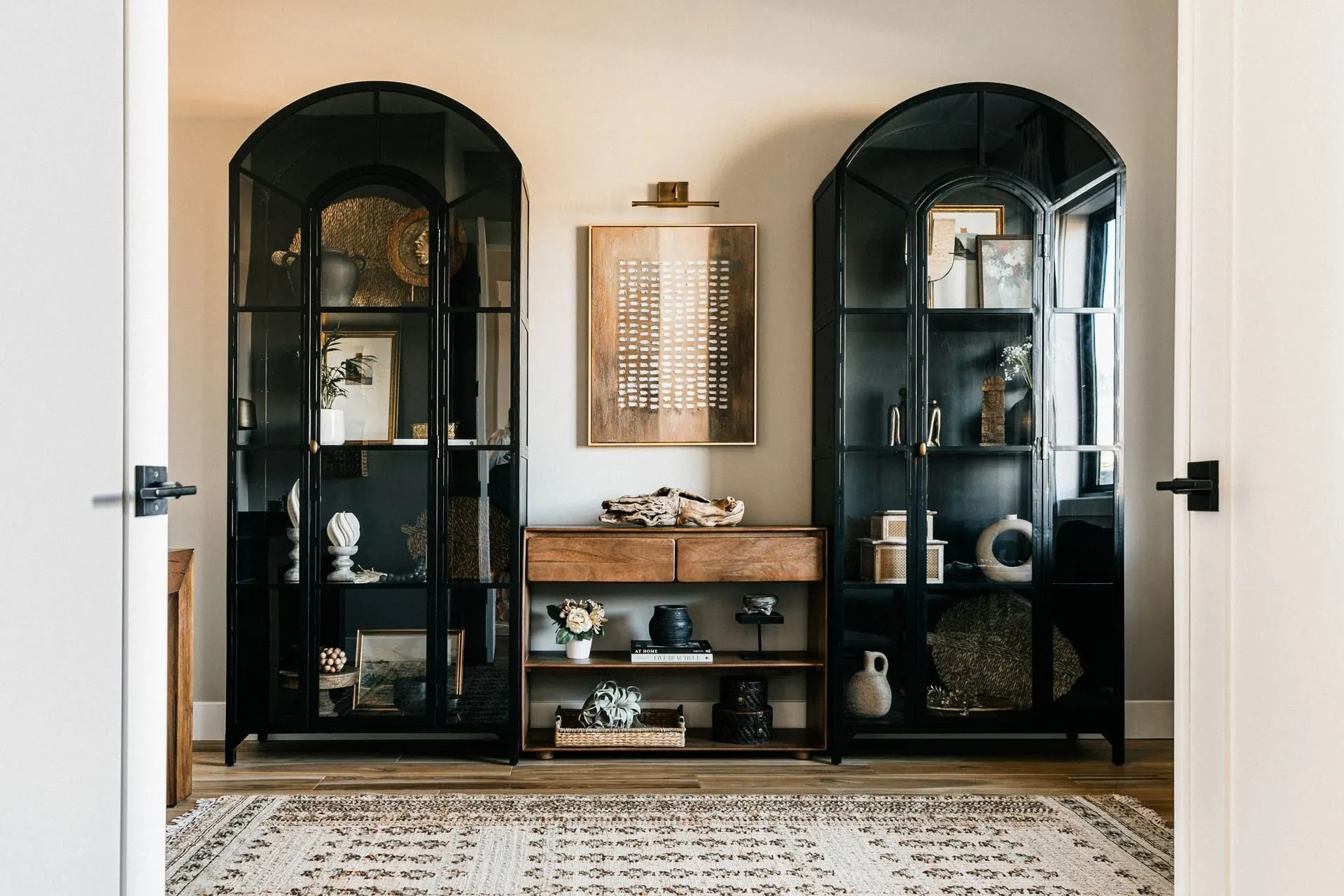
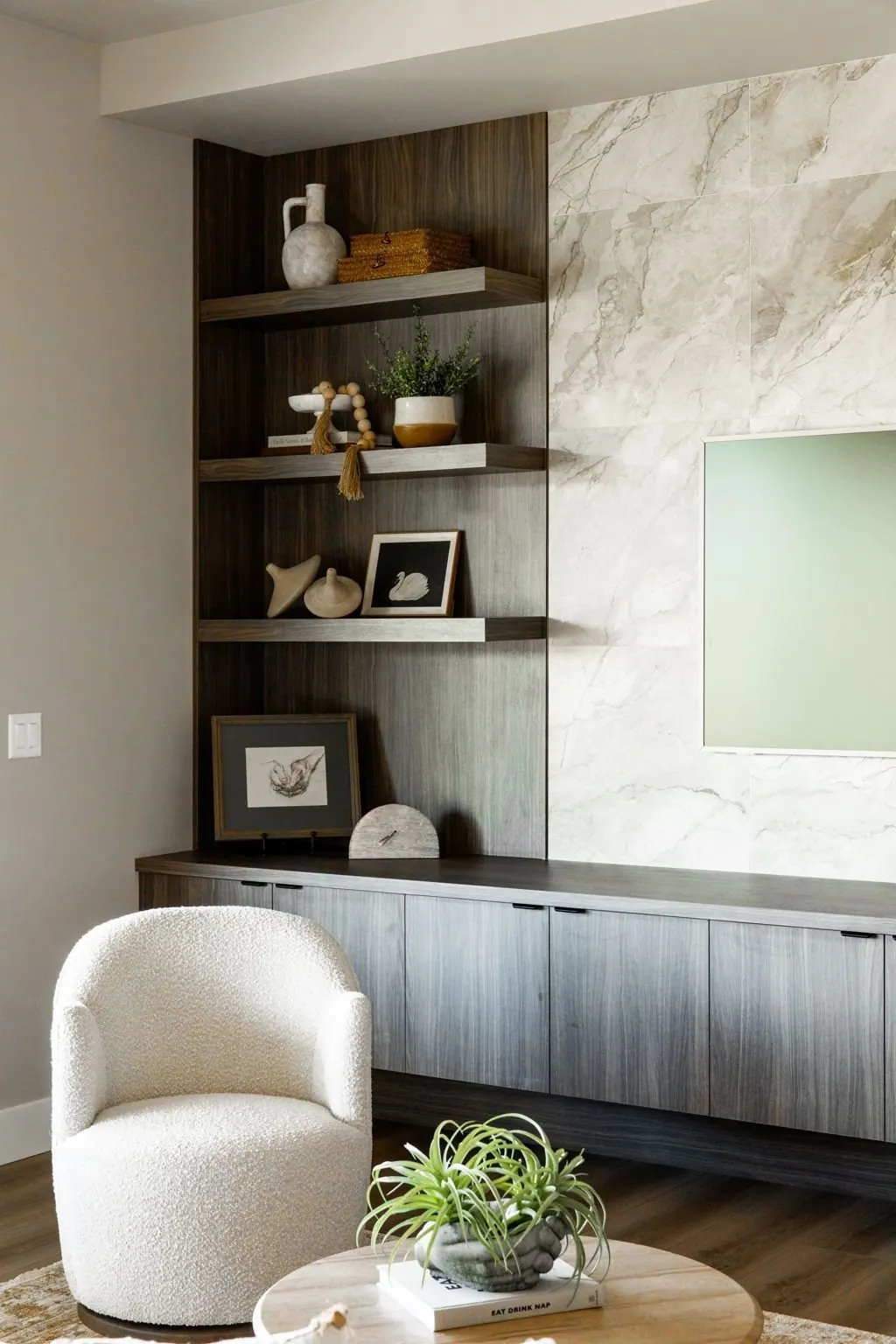
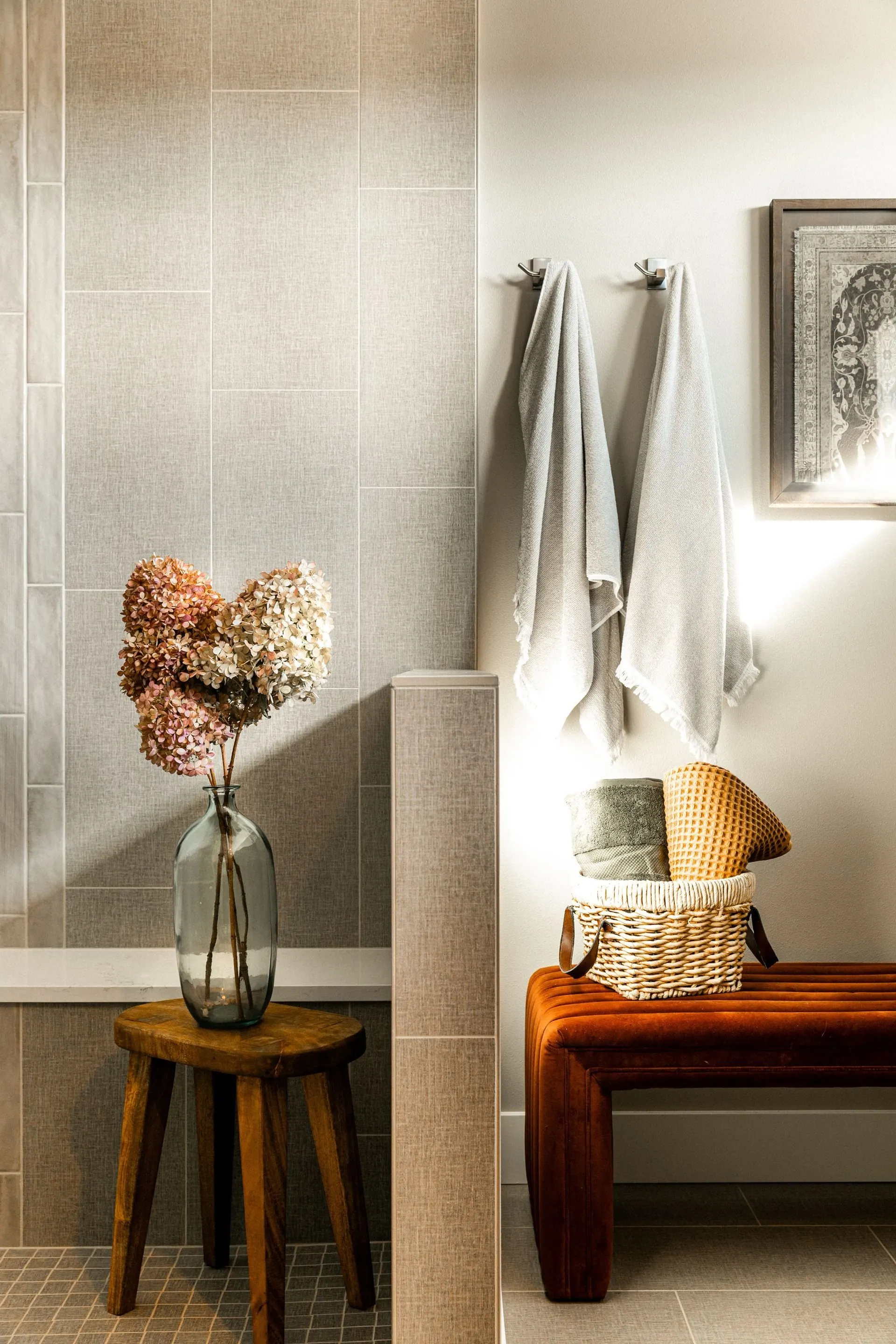
Shelves, consoles and cabinets are where a house shows who lives in it, and they are the hardest surfaces to get right on your own.
In their words
“Laney is a true artist and an incredible human. We purchased our dream home and had to furnish it from scratch. I didn't even know where to begin.”
“From the first design boards Laney sent me, I knew she fully grasped and understood the vision we had for our home.”
“Her rates are reasonable, and she and her services are absolutely priceless.”
Dwelling Design client · Full-home furnishing and styling
Furnishing in this valley
What a home here asks of its furniture
Sun is the first thing we plan around. Walls of south and west facing glass are common on these lots, and a valley full of reflected light will fade an unlined drape and bleach a walnut top within a few seasons. So the seats that sit in the light get solution dyed textiles, the drapery gets lined, and the finishes are chosen for how they hold their color rather than how they look on the showroom floor.
The second thing is how households here live between the seasons. Homes open wide onto patios and decks all summer, then pull in tight around a fireplace once the snow arrives. Furniture has to work both ways: seating that regroups for a crowd outdoors in August and a quiet room in January, outdoor pieces rated for a real winter, and an entry that can absorb boots, coats and gear coming back from the mountain or the river.

Good questions
Questions before the first order goes in
What does furnishing and styling include?
It covers design planning, purchasing and install. In practice that means measured furniture plans, selections for upholstery, case goods, rugs, lighting, window treatments, art and accessories, then trade ordering, receiving, inspection and a full install day. It can cover a whole house or one important room, and it can follow a build, follow a remodel, or stand entirely on its own.
How long does it take from approval to install?
Plan in months rather than weeks. Custom upholstery is commonly built to order over three to four months, case goods and lighting usually move faster, and the install is scheduled once enough of the order has been received and inspected. Expected dates are shared when the order is placed and updated as acknowledgements come back, so the timeline is never a mystery.
Do we need an interior designer in Wenatchee if we only want furniture?
No, but furniture is often exactly why people call. It is where the largest single checks in a project get written, and a mistake at that scale is expensive to undo. An interior designer in Wenatchee can plan the whole house at once, buy through trade accounts, and carry the ordering, tracking and install so you are not managing a dozen vendors yourself.
How is furniture planning different from space planning?
Space planning decides where walls, openings and functions sit, so it happens while a home is still being drawn or opened up. A furniture plan comes later and works inside the room you actually have: sofa depth, seating counts, walkway clearances, rug sizes and where a lamp needs an outlet. The two overlap, and doing both well is what keeps a beautiful floor plan from being unfurnishable.
Can you work with furniture we already own?
Yes, and we would rather keep whatever is worth keeping. Early in the plan we look at what you have, note what still fits the scale of the new rooms, and set aside anything genuinely good that only needs reupholstery. The rest gets replaced. Being honest about which pieces are holding a room back is part of the job.
How do you handle kids, dogs and everyday wear?
Durability is written into the specification rather than added as an afterthought. That means performance weaves and solution dyed fabrics on the seats that get used hardest, tight rug constructions instead of loose loops in traffic paths, and sealed or naturally forgiving tops on the tables. A house should be able to take an ordinary week without anyone flinching.
Dwelling Design · Wenatchee, WA
Let's furnish the whole house at once
If your home is newly built, freshly remodeled, or simply still half empty after a few years, we can plan it as one project, order it through the trade, inspect every carton before it reaches you, and install it in a single day. Tell us which rooms are still waiting and how you want to live in them.
Start a Conversation